











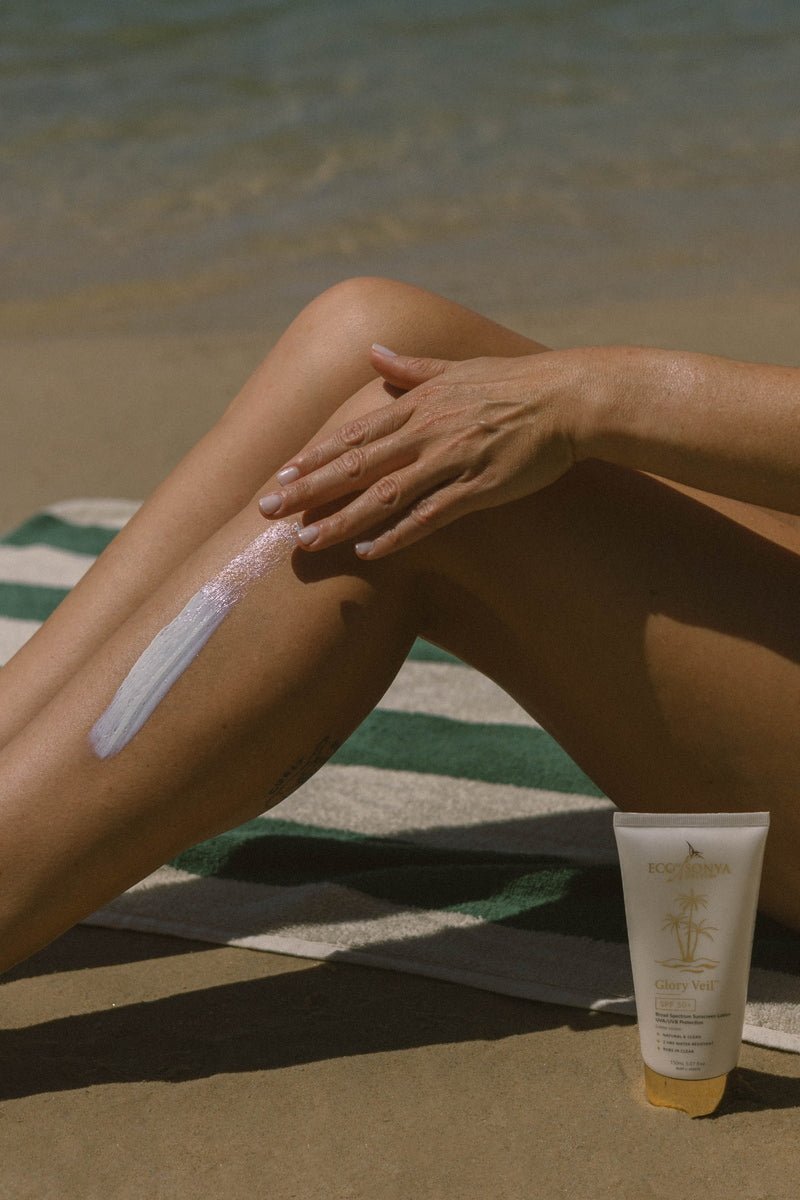

Natural Cosmetic Sunscreen for Effective UV Protection
Limiting sun protection to just the hot summer months would be negligent. Many skin damages and a large part of premature skin aging can be attributed to sun exposure. It is believed that a major portion of premature, visible skin aging is caused by sun exposure.
Short-wave UV-B rays (280 to 320 nm) penetrate the outermost skin layer, cause sunburn, and are responsible for an increased risk of skin cancer. The longer-wave UV-A rays (320 nm to 400 nm) penetrate deeper into the skin. They reach the lower skin layers and can cause permanent damage in the connective tissue, leading to premature skin aging.
Manufacturers of natural cosmetics have greatly improved the application properties of mineral sunscreens so that they no longer leave white residues, making them an attractive option for all skin types.
Even with chemical filters, which were long taboo in natural cosmetics, there are now safe options gaining popularity. Manufacturers of natural cosmetic sunscreens use safe chemical filters that do not cause hormonal effects or trigger allergies.
The Features and Benefits of Mineral Sunscreen
Mineral sun protection, also called physical sun protection, remains on the skin surface and reflects harmful UV rays. The cream contains zinc oxide or titanium dioxide as active ingredients. These minerals contain small particles that settle on the skin and form a physical barrier. This barrier protects the skin and ensures the reflection of UVA and UVB rays.
Since mineral sunscreen does not contain harmful ingredients such as nanoparticles, octocrylene, or benzophenone, it is suitable for people with sensitive skin as well as toddlers and babies. Additionally, these additives are harmful to the environment and destroy coral reefs.
Mineral sunscreen offers immediate protection after application, so you don’t have to wait 15 to 30 minutes for it to take effect. In our range, you will also find a mineral UV protection that immediately protects sensitive children's skin after application with a highly effective mineral UV filter against UVA and UVB rays, sunburn, and premature skin damage. Furthermore, mineral sunscreen is ideal for sensitive skin because, unlike chemical creams, it does not absorb into the skin. This makes it less likely to cause skin irritation.
Moreover, mineral sunscreen does not clog pores as easily because it adheres to the skin surface and does not penetrate the skin. This especially protects the eyes or other sensitive areas that can burn or become irritated.
The Benefits of Natural Cosmetic Sunscreen with Safe Chemical Filters
The advantages of chemical sun protection filters lie mainly in their light texture and invisible application. Compared to some mineral filters, they do not leave a white film on the skin and can therefore provide an invisible finish. They also tend to spread evenly on the skin, making application easier.
Non-harmful chemical filters in natural cosmetic sunscreens include Diethylhexyl Butamido Triazone, Bis-Ethylhexyloxyphenol Methoxyphenyl Triazine, Ethylhexyl Triazone, or Butyl Methoxydibenzoylmethane, all of which have no hormonal effects, do not trigger allergies, and do not accumulate in the body.
UV Protection Essential Not Only in Summer
Sun protection for the face is important not only in summer. Even during the cold seasons, UV rays can penetrate beneath the outermost skin layer and damage it. This mainly affects the collagen in the dermis, which is responsible for the skin’s elasticity. When these are destroyed, their number decreases and wrinkles form. UV rays can cause not only cosmetic problems – in the worst case, they can even trigger skin cancer. Therefore, it is all the more important to protect the sensitive skin on the face from the sun.
Which Sun Protection Factor Is Right?
Generally, every sun protection factor (SPF) is suitable for every skin type. The decisive factor here is the so-called self-protection time: it indicates how long the skin can protect itself from the sun’s rays without UV protection. Depending on skin color, the self-protection time is shorter or longer. The rule is:
- very fair skin: 5 to 10 minutes
- fair skin: 10 to 20 minutes
- medium brown skin: 15 to 25 minutes
- dark skin: 20 to 30 minutes
This time is multiplied by the SPF to calculate the final protection time. For fair skin with an SPF of 30, this would be 300 minutes (10x30 = 300). The skin would thus be protected from UV rays for 300 minutes. From this, it can be said: the higher the SPF, the longer the protection time. It is therefore recommended to use a sunscreen with a high SPF even for dark skin to protect the skin from the sun as long as possible.
If you want to know more precisely how mineral and modern organic UV filters differ, in our guide we explain which filters we prefer, which we consciously do not carry, and what really matters in natural sun care.