











NATURE IN A BOTTLE: WHAT ARE NATURAL FRAGRANCES?
Many conventional perfumes use a wide variety of synthetic fragrances. Natural perfumes, by contrast, deliberately use fragrances of natural origin – from essential oils and resins to modern fragrance ingredients derived from renewable raw materials. Our selection includes both perfumes formulated entirely with natural ingredients and high-quality niche fragrances and home fragrances with a range of fragrance concepts. But what makes natural perfumes so special?
CONVENTIONAL PERFUMES WITH SYNTHETIC FRAGRANCES
As a rule, perfumes are made from a blend of naturally derived, nature-identical, and synthetically produced fragrance ingredients. Modern perfumery often uses molecules such as Ambroxan, Cashmeran, or Iso E Super. They make it possible to create notes that can be difficult to reproduce with natural raw materials alone. Esters such as benzyl acetate or linalyl acetate can also contribute to a fragrance profile; these compounds can occur naturally or be specifically manufactured.
Synthetic molecules have the advantage of being producible to a consistent quality, which makes them easier to use in perfumery and opens up new creative possibilities.
A perfume’s ingredient list does not show every individual fragrance molecule. Fragrance compositions are often listed under “Parfum” or “Fragrance” in the INCI list; certain fragrance allergens that must be declared are also listed individually.
FRAGRANCES, TOLERABILITY, AND TRANSPARENCY
Whether a fragrance ingredient is of natural or synthetic origin does not, by itself, determine its safety. Natural essential oils can also contain allergenic components. What matters is the specific substance, its concentration, and the formulation of the finished perfume. In the EU, cosmetic products must meet safety and ingredient-labeling requirements.
- Phthalates encompass various substances with different properties. Diethyl phthalate (DEP), for example, has been used as a solvent for fragrances; it is not appropriate to treat all phthalates as having the same health risks.
- Parabens are preservatives that are regulated differently depending on the compound and its intended use. Not every synthetic fragrance composition contains parabens.
- BHT (butylated hydroxytoluene) is an antioxidant that can protect sensitive ingredients from oxidation. Its assessment depends on the specific conditions of use and concentrations.
- EDTA acts as a chelating agent, binding metal ions and stabilizing formulations. When assessing it, possible effects on bodies of water are relevant in addition to its use.
- Fragrance allergens such as linalool, geraniol, and eugenol can occur in natural essences or be produced synthetically. Certain allergens are subject to labeling requirements.
- Lyral is an example of a fragrance ingredient that may cause allergies and is no longer permitted in cosmetic products in the EU.
Those who want to find out more can look to the INCI list and information from the relevant brand. Certified natural cosmetics also follow established standards for permitted raw materials and manufacturing processes. Naturalness is a transparent quality criterion, but it does not guarantee that a product is allergen-free.
THE ESSENCE OF NATURAL PERFUMES
Natural perfumes often use essential oils, absolutes, and other plant-derived fragrance ingredients. They come from flowers, leaves, bark, fruit, herbs, or wood. They also include valuable tree resins such as frankincense, benzoin, or galbanum. Alcohol of plant origin is often used as a carrier; whether and how it is denatured depends on the specific formulation and is not, in itself, evidence of a health risk.
Typical fragrance components of essential oils include geraniol, linalool, eugenol, and coumarin. These substances occur naturally in plant essences but can also be produced synthetically to be chemically identical to their natural counterparts. Some people may have an allergic reaction to them; checking the ingredient list is especially recommended if you have a known fragrance sensitivity.
Animal-derived fragrance ingredients also played a role in the history of perfumery, including ambergris, civet, and natural musk. Today, similar fragrance accords are often created using plant-based or synthetic fragrance ingredients. This preserves their distinctive character without requiring the use of the original animal-derived raw materials.
THE MULTIFACETED DEPTH OF NATURAL FRAGRANCES
Natural perfumes can be exceptionally complex and multifaceted. A single essential oil often contains many different fragrance molecules. This is precisely what makes working with natural raw materials challenging: their character is influenced by their origin, harvest, and processing. The expertise of perfumers such as Douglas Little of Heretic Parfum lies in combining these facets into a harmonious composition.
The beauty of natural fragrance ingredients lies in how vividly they often develop on the skin. Top, heart, and base notes emerge gradually and can be perceived differently by each person. Synthetic fragrance compositions can also be complex; the appeal of a natural perfume lies especially in the distinctive variety of its source materials. Some natural perfumes last a little less long than fragrances designed for a long-lasting sillage – but they often unfold into an intimate, multifaceted scent profile that changes throughout the day.
THE PRODUCTION AND EXTRACTION OF ESSENTIAL OILS
Essential oils are usually obtained through distillation or cold pressing. In distillation, plant material is treated with water vapor; the essential oil is then separated from the condensed vapor. In cold pressing, which is used mainly for citrus fruits, the peels are mechanically pressed. Some delicate floral scents are obtained by extraction instead.
A NEW WAY OF THINKING ABOUT PERFUMERY?
Modern niche perfumery offers an exciting variety: some houses consistently work with naturally sourced raw materials, while others combine natural essences with modern fragrance molecules. The origin of a raw material alone determines neither its tolerance nor its environmental impact – the extraction process, quantities required, and manufacturing methods are also important.
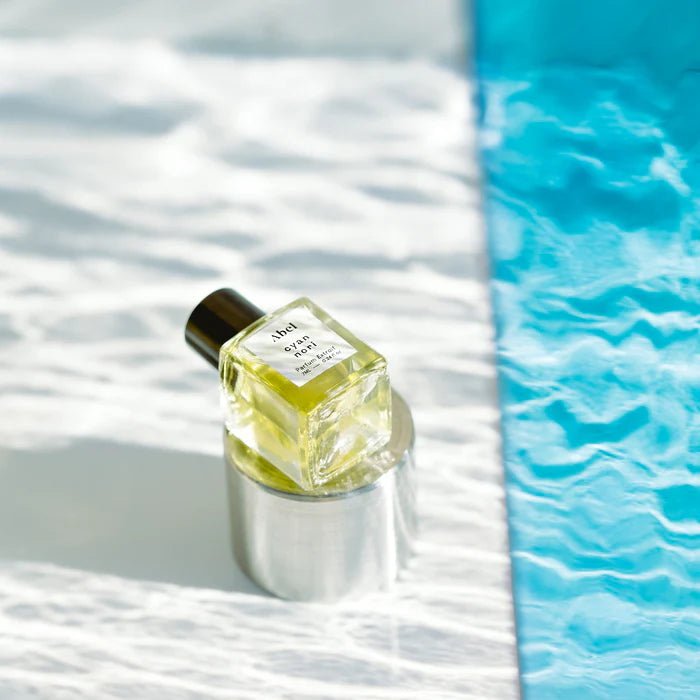
For Abel Parfum, this means a consistent commitment to 100% natural fragrance ingredients that are not derived from petrochemicals, including through the use of modern biotechnology and fermentation. Heretic Parfum works with a high proportion of naturally sourced and naturally derived fragrance ingredients to create expressive, unusual compositions. The exact natural content depends on the fragrance: for example, the brand states that Werwulf contains 97% naturally derived ingredients; some other compositions reach 100%. This variety makes the formulations transparent without claiming a single percentage for all fragrances. Our range is also enriched by other selected niche perfumes with distinctive fragrance concepts.
BENEFITS OF NATURAL COSMETIC FRAGRANCES
Choosing a natural niche perfume comes with many special qualities. Botanical essences, resins and woods open up a rich fragrance palette. With brands like Abel, for instance, avoiding petrochemically derived fragrance ingredients is a specific, verifiable feature. However, how sustainably a perfume is produced overall also depends on the sourcing of raw materials, packaging and transportation.
In addition, niche fragrances from the natural cosmetics sector offer an authentic, distinctive fragrance experience that develops uniquely on the skin. Natural perfumes can also contain fragrance allergens such as geraniol or linalool. If you love their special world of raw materials, you’ll find a wide range of styles here - from transparent and fresh to dark, spicy and balsamic.
HOW CAN I TRY HIGH-QUALITY, NATURAL PERFUMES?
A fragrance truly reveals its character on the skin. That's why we offer samples of all our perfumes: Each sample is carefully hand-decanted and labeled by us, and contains around 1.2 ml of perfume. This lets you try out new favorites at your leisure. Another option is our perfume discovery sets. Our specially curated sets contain five selected fragrances, for example from one fragrance family, to suit a mood or around a particular theme. You’ll also find discovery sets from individual perfume houses in this selection.
NATURAL FRAGRANCES: A STATEMENT OF QUALITY AND THOUGHTFUL CHOICES
Natural niche fragrances offer a wonderful way to discover the beauty and diversity of botanical aromatic ingredients. They bring the multifaceted world of nature into the bottle and pair it with true perfumery craftsmanship. Here, these special creations meet modern, carefully selected perfumes and home fragrances - for everyone who values character, quality and thoughtful choices.