







Which facial oil for which skin type? The ultimate facial oil guide
|
|
Time to read 25 min









|
|
Time to read 25 min
Jojoba oil, rosehip oil, almond oil, hemp oil, argan oil, or perhaps a light dry oil? Facial oils differ more than you might expect at first glance. Some absorb almost immediately, while others leave a protective, rich film. Some are particularly rich in linoleic acid, while others are characterized by oleic acid - and that exactly influences how an oil feels on the skin and which skin needs it may be suitable for.
In our facial oil guide, we show you which facial oil suits which skin type, what terms such as dry oil and comedogenicity mean, and how well-known plant oils differ.
As an initial guide:

This classification is not a rigid rule. What matters is not only the classic skin type but also the skin's current condition. Combination skin can be dehydrated at the same time, sensitive skin can be dry or rather oily, and mature skin can also be prone to blemishes.
Especially when choosing facial oils, it is therefore worth considering fatty acid profile, texture, and richness in addition to skin type.
Plant oils consist primarily of triglycerides - compounds made up of glycerin and various fatty acids. What matters is not only which fatty acids are present, but also the ratio in which they occur.
The fatty acid profile also affects how an oil feels on the skin. Oils rich in linoleic acid, such as grapeseed, hemp, or raspberry seed oil, often feel comparatively light and leave a less pronounced oil film.
Oils with a higher proportion of oleic acid, on the other hand, usually feel softer, smoother, and somewhat richer. Almond, avocado, and plum kernel oils therefore often remain perceptible on the skin for longer and leave a more nourishing lipid film.
There are also other differences: Some oils contain special fatty acids such as gamma-linolenic acid, while others are notable for natural accompanying compounds such as tocopherols, phytosterols, or carotenoids. These components also influence an oil's cosmetic properties.
Processing also plays a role. Cold-pressed, minimally refined plant oils retain a larger proportion of their natural accompanying compounds and more often have a characteristic color and a distinctive scent.
This is how the typical profile of a plant oil develops: light or rich, fast-absorbing or perceptible for longer, neutral or characteristically scented - depending on its fatty acid profile, accompanying compounds, and processing.
In addition to the fatty acid profile, spreading behavior also determines how an oil feels on the skin. This refers to how quickly and how widely an oil spreads across the skin's surface during application.
A highly spreadable oil can be distributed very finely with just a few drops and forms a thin film. Other oils spread more slowly and remain more noticeable where they were applied. They therefore often feel richer.
The term absorption behavior also primarily describes a sensory impression when referring to plant oils. An oil does not simply disappear completely into the skin. Some of its lipids spread through the upper layers of the stratum corneum, while some remain on the surface as a thin conditioning film.
How quickly the skin feels dry again or barely oily after application therefore depends on several factors:
fatty acid profile
viscosity and spreading behavior
amount of oil used
composition of the entire product
individual characteristics of the skin
A light, highly spreadable oil can therefore feel almost “dry” after just a short time, while a richer oil remains perceptible for longer as a protective lipid film.
These create the major sensory differences between facial oils - from featherlight and silky to rich and enveloping.

Two fatty acids play a particularly important role when comparing facial oils: linoleic acid and oleic acid.
Linoleic acid is an essential omega-6 fatty acid and a component of important lipid structures in the skin barrier.
Oils with a high linoleic acid content often have a relatively light texture. They are therefore particularly interesting for combination skin, oily skin, and skin for which traditional facial oils quickly feel too heavy.
Typical examples include:
Grapeseed oil
Hemp oil
Safflower oil
Raspberry seed oil
some rosehip oil
Oleic acid is a monounsaturated omega-9 fatty acid. Plant oils rich in oleic acid often feel softer, smoother, and richer.
Examples include:
Almond oil
Avocado oil
Plum kernel oil
Apricot kernel oil
Hazelnut oil
Macadamia oil
Dry or lipid-depleted skin in particular often finds such oils pleasant.
However, the same applies here: Being rich in oleic acid does not automatically mean “better for dry skin.” If the skin barrier is already severely compromised or very sensitive, a more balanced fatty acid profile may be more suitable. What matters is always the oil as a whole or the finished formulation.
The term dry oil, “dry oil,” or “Dry Oil” does not describe a specific type of oil. It primarily refers to the skin feel after application.
A dry oil:
absorbs relatively quickly
spreads easily
leaves little greasy residue
feels soft and silky rather than heavy or oily
In finished cosmetic products, this dry skin feel can result both from the plant oils used and from the formulation as a whole.
Among pure plant oils, the following oils are considered relatively lightweight, for example:
Grapeseed oil
Hemp oil
Hazelnut oil
Raspberry seed oil
Jojoba oil
Dry oils are particularly interesting for combination or oilier skin, or for anyone who likes the nourishing effect of a facial oil but does not want a very shiny or heavy finish.
By contrast, almond, avocado, or plum kernel oil usually feel noticeably richer.
The question of comedogenicity is one of the most common questions about facial oils.
Comedogenic means, simply put, that a substance may promote the formation of comedones, or blackheads.
On the internet, you often find tables that classify oils on a scale from 0 to 5. These values seem very clear-cut - but they are not.
The commonly used scales are partly based on older testing methods and cannot be reliably applied to every skin type or finished cosmetic product. There are also differences in quality, processing, concentration, and composition.
That is why this guide does not use a rigid number, but rather a comedogenicity tendency as a practical guide:
Rather low
The oil is generally considered relatively unlikely to clog pores. An individual reaction is nevertheless possible.
Individual
The oil cannot be meaningfully classified in general as either rather low or rather high. Skin type, amount used, and individual tolerance play a greater role here.
Rather high
The oil is richer or is more frequently associated with a greater tendency to clog pores. Anyone prone to blackheads or blemishes should start with a small amount.
Important: This classification is not a definitive prediction either. Comedogenicity depends not only on the individual plant oil, but also on the dosage, processing, overall formulation, and individual skin.
Jojoba oil occupies a special position among facial oils: chemically speaking, it is not a classic plant oil but a liquid wax.
It is highly resistant to oxidation, spreads easily, and usually leaves the skin feeling light and smooth. Jojoba oil supports the skin's natural lipid barrier and helps reduce moisture loss.
Because it is neither particularly rich nor extremely lightweight, it is suitable for an unusually wide range of skin types.
Suitable for: normal, combination, oily, and sensitive skin
Skin feel: light to medium
Comedogenicity tendency: rather low
Argan oil is obtained from the kernels of the fruit of the Moroccan argan tree. Its fatty acid profile contains both oleic acid and linoleic acid and is complemented by natural tocopherols and other plant compounds.
It nourishes and softens without feeling as heavy as some oils particularly rich in oleic acid.
Argan oil is therefore a good all-rounder for skin that needs somewhat more lipids but does not want an exceptionally heavy facial oil.
Suitable for: normal, dry, and mature skin
Skin feel: medium, soft, and smooth
Comedogenicity tendency: individual
Sweet almond oil is one of the classic skincare oils. Its fatty acid profile is characterized by oleic acid, giving it its characteristic soft, supple texture.
Almond oil reduces a rough or tight feeling on the skin and is particularly interesting when the skin needs more lipids and protection.
Suitable for: normal, dry, and sensitive skin
Skin feel: medium to rich
Comedogenicity tendency: varies by individual; use sparingly if your pores clog very easily
Our recommendation: ODEN French Sweet Almond Oil - a cold-pressed French almond oil with vitamin E.
Wild rose oil is also known as rosehip seed oil or rosehip oil. It is one of the most interesting facial oils for demanding skin because it contains a high proportion of polyunsaturated fatty acids.
Depending on the variety and extraction method, it primarily contains linoleic and alpha-linolenic acids, along with natural accompanying compounds such as tocopherols and carotenoids.
This relatively lightweight oil leaves the skin feeling smooth and supple and is especially well suited to skin that appears dull, dry, or uneven.
Suitable for: mature, dry, normal, and dull skin
Skin feel: light to medium
Comedogenicity tendency: rather low
Our recommendation: ODEN Rosehip Concentrate - a concentrated oil made from wild rose and lupin seed oil for mature and dull skin.
Hemp oil has an unusually balanced profile of various polyunsaturated fatty acids and usually feels surprisingly lightweight on the skin.
Hemp oil is an interesting alternative, especially for people who find classic facial oils quickly become too heavy.
Suitable for: combination, oily, and blemish-prone skin
Skin feel: light, rather dry
Comedogenicity tendency: rather low
Grapeseed oil is one of the plant oils rich in linoleic acid and has a very lightweight texture.
It absorbs quickly, spreads easily, and usually leaves little oily residue. This makes it one of the classic plant oils for people looking for an especially lightweight facial oil.
Suitable for: combination, normal, and oily skin
Skin feel: very light and dry
Comedogenicity tendency: rather low
Our recommendation: ERE PEREZ Australian Blue Cypress Face Nectar - a lightweight everyday face oil with blue cypress and grapeseed oil.
Hazelnut oil is predominantly rich in oleic acid, but compared with many other oleic-acid-rich oils, it has a surprisingly fine, dry skin feel.
It spreads easily and is therefore particularly well suited to skin that fluctuates between dry and oily areas.
Suitable for: combination, normal, and slightly dry skin
Skin feel: light to medium, rather dry
Comedogenicity tendency: rather low to individual
Our recommendation: ODEN French Hazelnut Oil - cold-pressed French hazelnut oil that is particularly suitable for combination and oilier skin.
Borage oil differs significantly from classic facial oils. It is characterized by its high content of gamma-linolenic acid, or GLA for short, a polyunsaturated omega-6 fatty acid.
It is precisely this high GLA content that makes borage oil interesting for dry, sensitive, and demanding skin.
It is one of the plant oils chosen less for a luxurious skin feel and more for its distinctive fatty acid profile.
Suitable for: dry, sensitive, and mature skin
Skin feel: medium
Comedogenicity tendency: individual
Our recommendation: ODEN French Borage Oil - pure, cold-pressed borage seed oil from French cultivation.
Like borage oil, evening primrose oil also contains gamma-linolenic acid, although typically in a lower amount.
It is therefore especially popular in skincare products for dry, sensitive, or rough skin and combines well with other plant oils.
Suitable for: dry, sensitive, and mature skin
Skin feel: medium
Comedogenicity tendency: individual
Avocado oil is one of the considerably richer plant oils. It is rich in oleic acid and contains various natural companion substances.
The oil leaves a more noticeable lipid film and is therefore particularly suitable for skin that quickly feels dry, rough, or tight after cleansing.
Those who prefer lightweight dry oils will generally find avocado oil too rich.
Suitable for: dry, very dry, and mature skin
Skin feel: rich
Comedogenicity tendency: rather high
Plum kernel oil is one of the oleic-acid-rich plant oils and leaves the skin soft and supple.
Its natural scent is also special: high-quality plum kernel oil often evokes marzipan, almond, or delicate stone fruit, making application an unusually sensual skincare ritual.
Suitable for: normal, dry, and mature skin
Skin feel: medium to rich
Comedogenicity tendency: individual
Our recommendation: ODEN French Organic Plum Oil - French organic plum kernel oil with a characteristic, delicate almond-like fragrance.
Cherry kernel oil is much less well known than almond or apricot kernel oil, but has an interesting balance of various unsaturated fatty acids.
It feels soft and smooth without seeming particularly heavy. Sensory-wise, it falls between very lightweight dry oils and significantly richer nourishing oils.
Suitable for: normal, dehydrated, mature, and slightly dry skin; depending on the skin feel, combination skin as well
Skin feel: light to medium
Comedogenicity tendency: individual
Our recommendation: ODEN French Cherry Oil made from Montmorency cherry kernels.
Raspberry seed oil is rich in polyunsaturated fatty acids and contains natural tocopherols and carotenoids.
Despite its nourishing properties, it feels relatively light and leaves behind only a slight oily film. This makes it a good choice for skin that needs lipids but does not like heavy oils.
Suitable for: combination, normal, dull, and dehydrated skin
Skin feel: light to very light
Comedogenicity tendency: rather low
Our recommendation: LA CANOPÉE Smoothing Flower Eye Care - targeted care for the eye area with raspberry seed oil and coenzyme Q10.
Cacay oil is extracted from the seeds of the South American cacay tree and is particularly rich in unsaturated fatty acids.
It has a pleasantly delicate texture and is often used in care products for mature, dry, or dull skin.
Suitable for: normal, dry, and mature skin
Skin feel: light to medium
Comedogenicity tendency: individual
Our recommendation: NAYA Cacay Beauty Oil or NAYA Everyday Face Oil, which combines cacay oil with grapeseed and almond oils, among others.
Prickly pear seed oil is one of the most labor-intensive plant oils in cosmetics. The small seeds contain very little oil, which is why comparatively large quantities of fruit are needed for its extraction.
The oil is characterized by a high proportion of linoleic acid and natural tocopherols. Despite its nourishing properties, it has a comparatively delicate skin feel.
Suitable for: normal, dry, mature, and demanding skin
Skin feel: light to medium
Comedogenicity tendency: rather low to individual
When it comes to sea buckthorn, it is worth taking a closer look at the name, because sea buckthorn seed oil and sea buckthorn fruit pulp oil differ significantly from one another.
Sea buckthorn seed oil contains mainly linoleic acid and alpha-linolenic acid, giving it a high proportion of polyunsaturated fatty acids.
Sea buckthorn pulp oil, on the other hand, has an unusual fatty acid profile with a high proportion of palmitoleic acid (omega-7). It also contains abundant carotenoids, which give the oil its intense orange to reddish color.
In facial oil blends, both variants are sometimes combined.
Suitable for: normal, dry, mature, and demanding skin; the seed oil is also interesting for combination skin
Skin feel: light to medium, depending on the sea buckthorn fraction used
Comedogenicity tendency: individual
Buriti oil is obtained from the fruits of the buriti palm and is one of the most distinctive South American plant oils.
Its fatty acid profile is predominantly characterized by oleic acid. At the same time, its high content of natural carotenoids, especially beta-carotene, is particularly notable; these give the oil its vivid orange-red color.
Buriti is therefore generally used not only for its lipids, but also as a color-rich and antioxidant-rich component in more complex facial and body oils.
Suitable for: normal, dry, mature, and dull skin
Skin feel: medium, soft, and smooth
Comedogenicity tendency: individual
Apricot kernel oil has a fatty acid profile dominated by oleic acid and also contains a significant proportion of linoleic acid.
Sensorially, it is reminiscent of almond oil, but often feels somewhat finer and lighter. It leaves the skin soft and smooth without being one of the particularly heavy plant oils.
This makes apricot kernel oil an uncomplicated care oil for anyone who finds very light dry oils insufficient and rich oils too heavy.
Suitable for: normal, dry, sensitive, and mature skin
Skin feel: light to medium, soft
Comedogenicity tendency: individual
Marula oil is obtained from the kernels of the fruits of the African marula tree.
It is one of the more oleic-acid-rich plant oils and accordingly has a soft, smooth skin feel. At the same time, it spreads easily and can feel surprisingly silky, which is why it is often used in luxurious facial care products.
Its composition makes it particularly interesting for skin that does not get enough nourishing comfort from very light oils.
Suitable for: normal, dry, and mature skin
Skin feel: medium, silky, and smooth
Comedogenicity tendency: individual
Baobab oil is obtained from the seeds of the African baobab tree. Its fatty acid profile contains, in particular, oleic acid, linoleic acid, and palmitic acid.
This gives it a sensory profile between very light and particularly heavy plant oils. It leaves a smooth lipid film and is well suited to skin that needs more intensive care without the heaviness of an especially rich oil.
Suitable for: normal, dry, mature, and demanding skin
Skin feel: medium to rich
Comedogenicity tendency: individual
Our recommendation: UND GRETEL Minne Face Oil - elegant oil blend with baobab, plum, and coffee seed oil.
Moringa oil is extracted from the seeds of Moringa oleifera and is also known as ben oil.
Its fatty acid profile is unusually dominated by oleic acid. It also contains smaller amounts of long-chain fatty acids such as behenic acid. The low proportion of polyunsaturated fatty acids makes moringa oil comparatively oxidation-stable.
On the skin, it feels soft, smoothing, and rather rich. It is therefore particularly well suited to skin that needs a noticeable lipid film and greater suppleness.
Suitable for: normal, dry, and mature skin
Skin feel: medium to rich, supple
For blemish-prone skin, comedogenicity tendency: individual
Among classic plant oils, macadamia oil has an unusual fatty acid profile. In addition to being rich in oleic acid, it contains a comparatively high proportion of palmitoleic acid, a monounsaturated omega-7 fatty acid.
This makes macadamia oil particularly interesting for dry, lipid-deficient skin. Despite its nourishing character, it spreads easily and leaves the skin feeling soft and silky.
Suitable for: normal, dry, and mature skin
Skin feel: medium to rich, silky
Comedogenicity tendency: individual
Kukui oil is extracted from the nuts of the Hawaiian kukui or candlenut tree.
It differs significantly from oleic-acid-rich oils such as almond, marula, or moringa: kukui oil contains high levels of linoleic acid and alpha-linolenic acid, making it one of the particularly polyunsaturated plant oils.
It feels comparatively light and spreads easily. However, due to its high proportion of polyunsaturated fatty acids, it is also more susceptible to oxidation than jojoba or moringa oil, for example.
Suitable for: normal, combination, dry, and demanding skin
Skin feel: light to medium
Comedogenicity tendency: rather low to individual
Our recommendation: LEAHLANI Mahana Coco Infusion - silky body and hair oil with kukui, macadamia, and sea buckthorn
Babassu oil is extracted from the seeds of the South American babassu palm and differs significantly from most of the other oils in this guide.
It primarily contains lauric and myristic acid, and therefore significantly more saturated fatty acids than grapeseed, rosehip or argan oil, for example. At cooler temperatures, babassu can therefore be solid or semisolid and melts on contact with warm skin.
The result is smooth, supple-feeling skin. Babassu is often used as an ingredient in balms, creams and oil formulations and less commonly used on its own as a classic liquid facial oil.
Suitable for: normal, dry and lipid-deficient skin
Skin feel: supple, melting and rather rich
Comedogenicity tendency: rather high

Dry skin produces too few skin-identical lipids. It often feels rough, tight or brittle and therefore benefits particularly from oils that replenish the lipid film and reduce moisture loss.
Interesting options include:
Almond oil
Argan oil
Borage oil
Evening primrose oil
Avocado oil
Plum kernel oil
Those who prefer a lighter finish can also choose rosehip or cacay oil.
ODEN French Borage Oil
An interesting alternative when sensitivity and a demanding skin barrier are also concerns alongside dryness.
NAYA Everyday Face Oil
Combines grapeseed, almond and cacay oils, among others, bringing together richer lipids with a relatively lightweight finish.
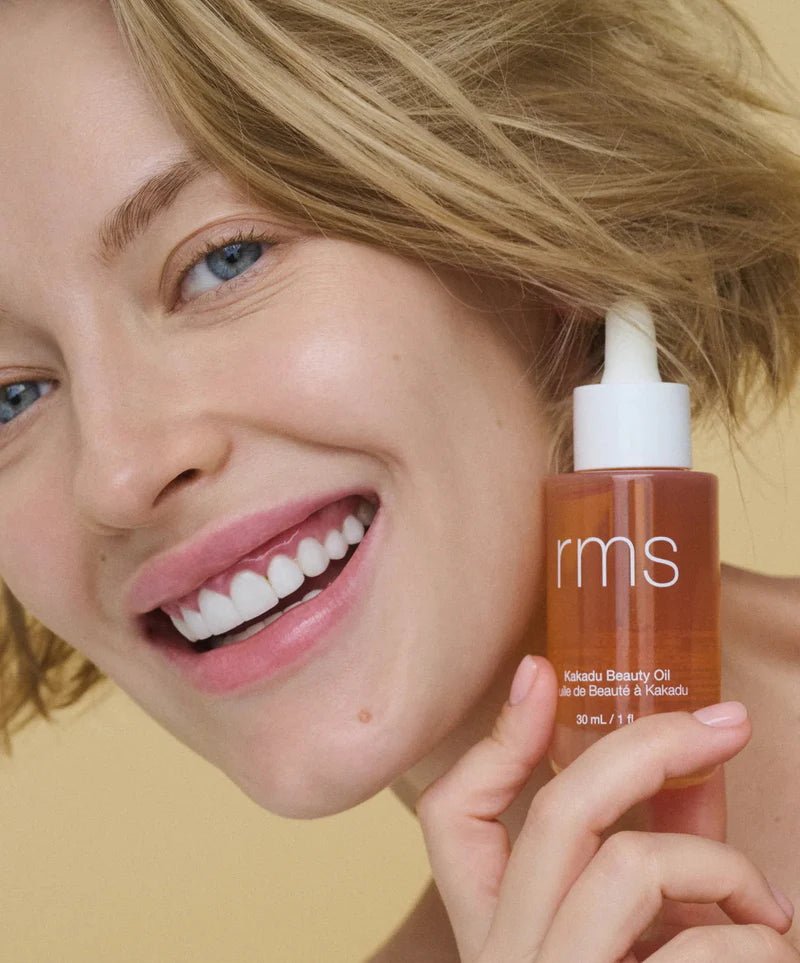
RMS BEAUTY Kakadu Beauty Oil
Facial oil with Kakadu plum, buriti oil and an adaptogenic herbal blend..
Combination skin usually combines a more oily T-zone with normal or drier cheeks.
Heavy oils can quickly feel like too much here. Lightweight oils that spread easily and do not leave a pronounced greasy film are therefore particularly pleasant.
Suitable options include:
Jojoba oil
Hazelnut oil
Grapeseed oil
Raspberry seed oil
Cherry kernel oil
ODEN French Hazelnut Oil
A particularly lovely single oil for combination skin, as it combines suppleness with a relatively dry finish.
RAAW Alchemy Blue Drops
A very lightweight blend based on jojoba, kukui and baobab oils with blue tansy and blue yarrow - particularly interesting for combination and oilier skin.
THIS PLACE The Morning Glow
Lightweight facial oil with grapeseed oil, squalane and golden algae. Helps retain moisture and leaves skin soft with a natural glow
Oily skin does not automatically need completely oil-free skincare.
What matters much more is which oil, how much of it, and the overall skincare routine being used.
For this skin type, fine, lightweight oils rich in linoleic acid are usually more comfortable than heavy, highly occlusive textures.
Particularly interesting are:
Jojoba oil
Hemp oil
Grapeseed oil
Hazelnut oil
Safflower oil
Raspberry seed oil
Start with just one or two drops and observe how your skin responds over time.
The same applies here: the designation “non-comedogenic” is no guarantee that every blemish-prone skin will tolerate a product equally well.
ODEN French Hazelnut Oil
A fine oil with a lightweight skin feel that is particularly well suited to combination and oilier skin.
LEAHLANI Siren Brightening Serum
Oil serum with sea buckthorn, spirulina, and jojoba - visually evens out a dull, uneven-looking complexion and gives a radiant Aloha Glow.
For sensitive skin, it is worth taking a close look at the entire formulation.
A very simple single oil can be beneficial because the number of potentially irritating ingredients remains low. At the same time, not every sensitive skin type tolerates every pure plant oil equally well.
Particularly interesting are:
Jojoba oil
Almond oil
Borage oil
Evening primrose oil
Trying new products first on a small area of skin is generally advisable for very reactive skin.
IPSUM Best Skin Nourishing Face Oil
Balancing facial care with apricot, grape, evening primrose, and macadamia - a rich, gentle formulation.
ODEN French Sweet Almond Oil
A minimalist single oil for dry and sensitive skin.
NAYA Cacay Beauty Oil
Premium cacay oil with powerful antioxidants, vitamins, and omega fatty acids - gentle on the skin and strengthens the skin barrier.
For very sensitive skin, we would also tend to choose fragrance-free products rather than complex oil blends with several essential oils.
Mature skin often becomes drier and lower in lipids. At the same time, elasticity, evenness, and radiance may become more central to your skincare routine.
The selection is particularly broad here: from a minimalist rosehip or cacay oil to complex active oils, many options are possible.
Interesting options include:
Rosehip oil
Cacay oil
Prickly pear seed oil
Argan oil
Borage oil
Avocado oil
JOSH ROSEBROOK Active Infusion Oil
A complexly formulated active oil with jojoba, rosehip, hemp, and sea buckthorn oils, as well as a vitamin C derivative and retinoid. A good choice if you want not only lipid care but also a targeted active ingredient step.
NAYA Cacay Beauty Oil
A more minimalist option for anyone who wants to focus on a high-quality plant oil.
ODEN Rosehip Concentrate
A concentrated rosehip oil with lupine seed oil for dull, mature, and demanding skin.
Normal skin is particularly uncomplicated when it comes to selection.
Depending on the skin feel you prefer, you can choose between lightweight and richer plant oils.
Particularly versatile are:
Jojoba oil
Argan oil
Cherry kernel oil
Plum kernel oil
Rosehip oil
If you prefer as little of an oily film as possible, opt for jojoba or cherry kernel oil. If you prefer a softer, richer feel, choose plum or argan oil.

Both have their appeal and their place.
A pure plant oil often consists of just one oil and possibly vitamin E as an antioxidant. This makes it possible to select very precisely which fatty acid profile and texture suit your own skin.
A facial oil blend, on the other hand, combines several plant oils. This allows different fatty acids, textures, and accompanying plant compounds to be brought together.
More complex active oil formulations may also contain ingredients such as:
contain.
The question is therefore less “What is better?” and more: Would you like a minimalist lipid product, or would you also like to integrate additional active ingredients into your routine?
Facial oils are highly concentrated and very economical. Often, just two to four drops are enough for the face and neck.
One possible order:
Gently cleanse your face.
Apply toner, essence, or a water-based serum.
Use face cream if needed.
Distribute two to four drops of facial oil between your fingertips.
Gently press or massage into the face and neck.
It is best to apply facial oil to still damp skin - this makes it particularly easy to spread and allows it to blend more pleasantly with the skincare applied beforehand.
With lightweight oils, individual drops can also be mixed directly with a cream.
The basic rule is:
Water-based products first, more lipid-rich products later.
After cleansing and toner, start with a serum, then apply a cream if needed, followed by facial oil.
However, this order is not a strict rule. Some lightweight oil serums are deliberately formulated by the manufacturer for use before a cream.
With a ready-made facial oil, it is therefore always worth checking the specific usage instructions.
A pure plant oil contains no water and therefore does not moisturize in the same way as, for example, a water-based serum.
Its strength lies elsewhere: Plant oils provide lipids, soften and smooth the skin, and help reduce water loss through the skin's surface.
For moisture-depleted skin, the combination of:
Moisture + lipids
particularly useful.
For example:
Toner or serum → cream → a few drops of facial oil.
Facial oil and face cream serve different purposes.
A cream is an emulsion of a water phase and an oil phase and can therefore provide moisture and lipids at the same time.
A pure facial oil is water-free and focuses on the lipid side of skincare.
Very dry or dehydrated skin often benefits from a combination of both. For uncomplicated skin, however, a lightweight facial oil together with a moisturizing serum may also be completely sufficient.

There is no oil guaranteed to suit every skin type equally well. Jojoba oil comes quite close to being a universal facial oil: It has a lightweight to medium skin feel, is highly oxidation-stable, and can feel pleasant on normal and dry skin as well as combination and oilier skin. On very dry skin, however, it may be too lightweight on its own, while very sensitive or blemish-prone skin may react individually in any case.
Dry oil describes an oil or oil blend that absorbs quickly and leaves little greasy residue. Grapeseed, hemp, raspberry seed, and hazelnut oils are among the plant oils that provide a relatively lightweight to dry skin feel.
Yes. The amount should be adjusted to your skin type. While dry skin often benefits from several drops in the morning and evening, one or two drops are often enough for combination or oily skin.
Yes. Lightweight oils such as jojoba, hemp, grapeseed, or hazelnut oil can also feel very pleasant on oily skin. Very rich oils are generally less obvious choices for this skin type.
There is no reliable, universally applicable list of “non-comedogenic” plant oils. The widely used comedogenicity scales are not standardized, and individual skin reactions vary. Jojoba, hemp, grapeseed, raspberry seed, and hazelnut oils are often interesting starting points for blemish-prone skin, especially in lightweight, simply formulated products. It is best to start with a small amount and observe how your skin responds.
This is possible, but cannot be reliably predicted based on the value of a single raw material. The type of oil, amount, processing, overall formulation, and individual skin all play a role. If you are prone to clogged pores, start with a few drops of a lightweight oil.
These figures come from widely used comedogenicity scales. They can provide a rough guide, but are not standardized and cannot be reliably applied to every skin type or finished product. We therefore consider a practical assessment based on skin feel, formulation, and skin type more helpful.
Almond, borage, argan, avocado, and plum kernel oils are interesting options. What matters is how rich you want the skincare to feel on your skin.
Jojoba, hazelnut, grapeseed, raspberry seed, and cherry kernel oils are among the particularly interesting options.
Rosehip, cacay, prickly pear seed, borage, and argan oils are very well suited as a base. In addition, complexly formulated active oils can be beneficial.
Facial oil is generally particularly easy to spread on slightly damp skin. More importantly, however, for dehydrated skin, a water-based product should be used first.
Usually after the cream, as oil is the more lipid-rich step in the skincare routine. With specially formulated oil serums, the recommended order may differ.
There is no one-size-fits-all answer, because cream and oil serve different purposes. A facial cream contains a water phase and an oil phase, and therefore provides the skin with both moisture and lipids. A pure facial oil, on the other hand, contains no water: It primarily provides lipids, softens the skin, and helps reduce moisture loss. For dehydrated or dry skin, combining the two is often particularly beneficial. Those with uncomplicated skin can also combine a moisturizing serum with a suitable facial oil, depending on their routine.
Not all facial oils are the same.
A lightweight grapeseed or hemp oil feels completely different on the skin from a rich avocado or almond oil. Rosehip, borage, and cacay oils, in turn, are particularly interesting because of their distinctive fatty acid profiles.
As a simple guide:
Combination and oily skin often feels comfortable with lightweight, fast-absorbing oils.
Dry skin usually needs more lipids and often tolerates richer oils.
Sensitive skin often benefits from simple formulations and carefully selected plant oils.
Mature skin offers the widest range - from pure rosehip oil to complexly formulated active oils.
The same applies to comedogenicity: A number alone says less than the combination of oil, formulation, dosage, and your own skin.
Those who know these differences will find it much easier to choose the facial oil that truly suits their own skin and skincare routine.


